In premarital counseling, I’ve often talked with them about red flags in relationships. Often, those are personality issues or family of origen background differences. But there are green flags too!
One of the biggest green flags—yet rarely talked about—is something called mutual influence.
The Gottmans (well-known relationship researchers) describe mutual influence as being willing to let your partner’s needs and perspective actually matter enough to shape your behavior. Not control you—just matter.
And here’s the key: this usually shows up during friction, not during the easy days when both of you are on your best behavior.
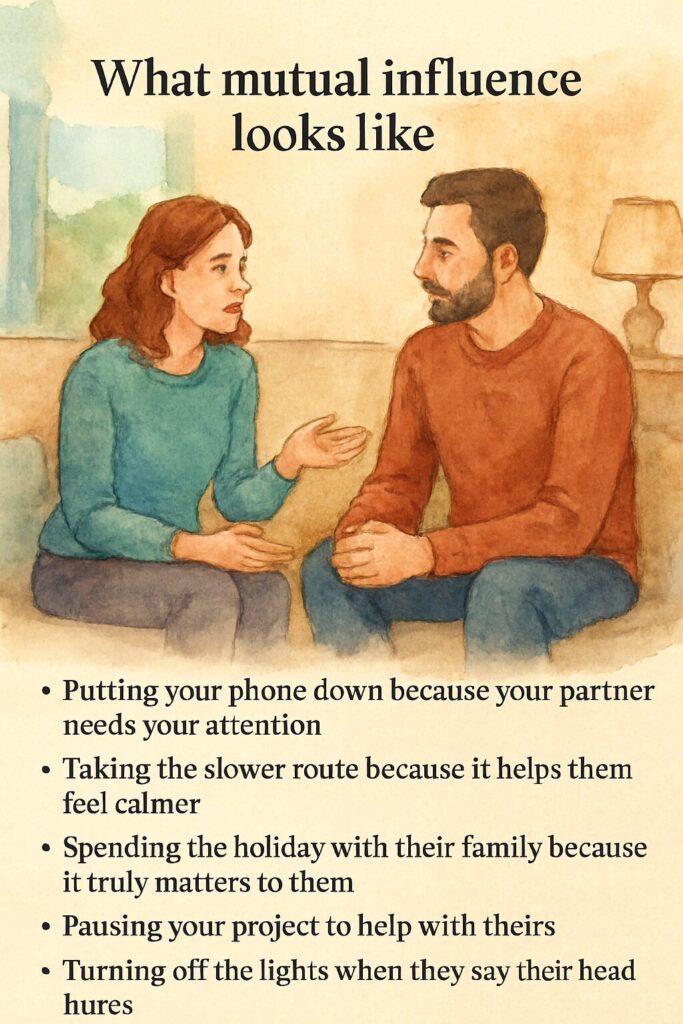
What mutual influence looks like
Research on hundreds of couples found that when both people feel like their voice counts—like they can genuinely influence each other—relationships stay more connected, more secure, and far more stable. When couples ignore this? They get stuck, grow more resentful, and satisfaction drops.
In real life, mutual influence looks like:
- Putting your phone down because your partner needs your attention
- Taking the slower route because it helps them feel calmer
- Spending the holiday with their family because it truly matters to them
- Pausing your project to help with theirs
- Turning off the lights when they say their head hurts
- Adjusting how you speak during arguments because you want them to feel safe, not attacked
This isn’t about losing yourself or stuffing down your needs. It’s about making space for your partner’s world while holding your own. That’s what builds a shared life instead of two separate ones under the same roof.
How to build mutual influence
Try one small weekly accommodation that you know matters to them—pick their restaurant, change the thermostat, follow their suggestion. Flexibility in tiny moments makes the big moments easier.
During disagreements, ask:
“What am I missing that would help this make more sense?”
It lowers the temperature fast and shows you actually want to understand—not win.
Individually these actions look small, but over time they create something huge: the feeling of being heard, considered, and important. That’s the difference between couples who just coexist and couples who keep growing closer year after yea