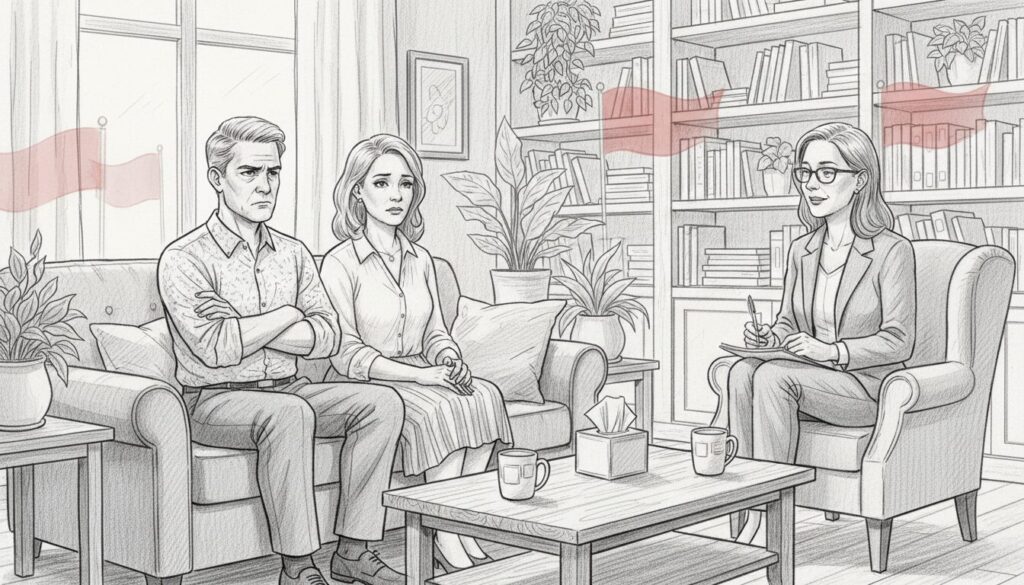
Hey there, future newlyweds! If you’re reading this, you’re probably knee-deep in wedding planning or at least thinking about popping the question. Premarital counseling? It’s like a relationship tune-up before the big day—super smart move. But let’s be real: sometimes these sessions uncover stuff that’s not all sunshine and roses. We’re talking red flags, those little (or not-so-little) warning signs that something in your partnership might need more work… or even a serious rethink.
As part of my own preparation to help couples in premarital preparation, I’ve dug into relationship advice from experts like those at the Gottman Institute, and here’s the thing: premarital counseling isn’t about scaring you off marriage. It’s about spotting issues early so you can fix them. But if these red flags show up and aren’t addressed, they could spell trouble down the road. Let’s break down the six big ones in a conversational way—think of this as your friendly chat over coffee. I’ll explain each, why it’s a flag, and what you can do about it.
1. Communication Breakdowns That Feel Like Talking to a Wall
Picture this: You’re in counseling, trying to discuss your future dreams, and your partner shuts down, changes the subject, or gets defensive every time. Red flag! Poor communication is the number one predictor of divorce, according to relationship gurus. If counseling reveals that you two can’t have an open, honest chat without it turning into a fight or silence, it’s a sign deeper issues like resentment or avoidance are at play.
What to do: Practice active listening exercises outside sessions. Tools like “I feel” statements can help. If it persists, consider if this is a deal-breaker—marriage thrives on teamwork, not telepathy.
2. Differing Core Values That Clash Big Time
Counseling often dives into big topics like kids, religion, career goals, or even politics. If you discover your values are worlds apart—like one wants a big family and the other is set on being child-free—that’s a massive red flag. It’s not just about compromise; mismatched fundamentals can lead to ongoing resentment.
What to do: Get real about your non-negotiables early. Counseling is the perfect space to explore this. If alignment seems impossible, it might be time to reassess if this partnership is built for the long haul.
3. Financial Secrets or Wildly Different Money Habits
Money talks in premarital counseling can get awkward fast. If one of you has hidden debt, spends like there’s no tomorrow, or refuses to discuss budgets, alarm bells should ring. Financial incompatibility is a top reason couples split, as it ties into trust and security.
What to do: Create a joint budget or use apps like Mint to track spending. Transparency is key—share your financial histories openly. If trust is broken here, professional financial counseling might be your next step.
4. Boundary Issues with Family or Friends
Ever heard the phrase “marrying the family”? Counseling might highlight if in-laws or friends are overstepping, or if one partner prioritizes them over you. A red flag waves if there’s resistance to setting boundaries, like not wanting to limit family involvement in decisions.
What to do: Discuss and agree on boundaries together. Phrases like “We’re a team first” can help. If family drama overshadows your relationship, therapy focused on individuation (becoming your own unit) could be a game-changer.
5. Intimacy or Emotional Connection Gaps
Premarital sessions often touch on physical and emotional intimacy. If counseling uncovers mismatched libidos, unresolved past traumas, or a general lack of spark, that’s a flag. It’s not just about sex—it’s about feeling seen and connected. Ignoring this can lead to affairs or emotional distance later.
What to do: Be vulnerable and explore solutions, like couples’ exercises or even sex therapy. Remember, intimacy evolves, but a total disconnect pre-marriage is worth addressing head-on.
6. Trust Issues or Unresolved Past Betrayals
If counseling brings up infidelity, lies, or lingering grudges from the past that haven’t been fully healed, that’s a glaring red flag. Trust is the foundation of any marriage, and if it’s shaky now, it won’t magically solidify after the vows.
What to do: Work on rebuilding through forgiveness exercises or individual therapy. If the wounds are too deep and one partner isn’t committed to healing, it might be a sign to pause the wedding plans.
Whew, that was a lot, right? Spotting these red flags in premarital counseling doesn’t mean your relationship is doomed—far from it. Many couples come out stronger, with tools to tackle life’s curveballs. The key is action: don’t ignore them, discuss them openly, and seek help if needed. If everything checks out green, congrats—you’re building a solid foundation!